
Winter Trials: Edinburgh, Ice and the Cards on the Table
It All Begins Here
A small group of core Edinburgh surfers signed up for the first Early Bird trials.
These guys have suffered enough.
Ice. Snow. Bone-snapping frost.
Frozen car parks. Iced leashes. Six-millimetre mornings.
That ends now.
For me, this was the moment.
It’s one thing surfing winter prototypes yourself. It’s another handing them to real surfers who aren’t you — or your best mate Chris — and saying:
Tell me what you really think.
No filters.
No favours.
Cards on the table.
Over the coming weeks we’ll be sharing:
• The results of those cold water trials
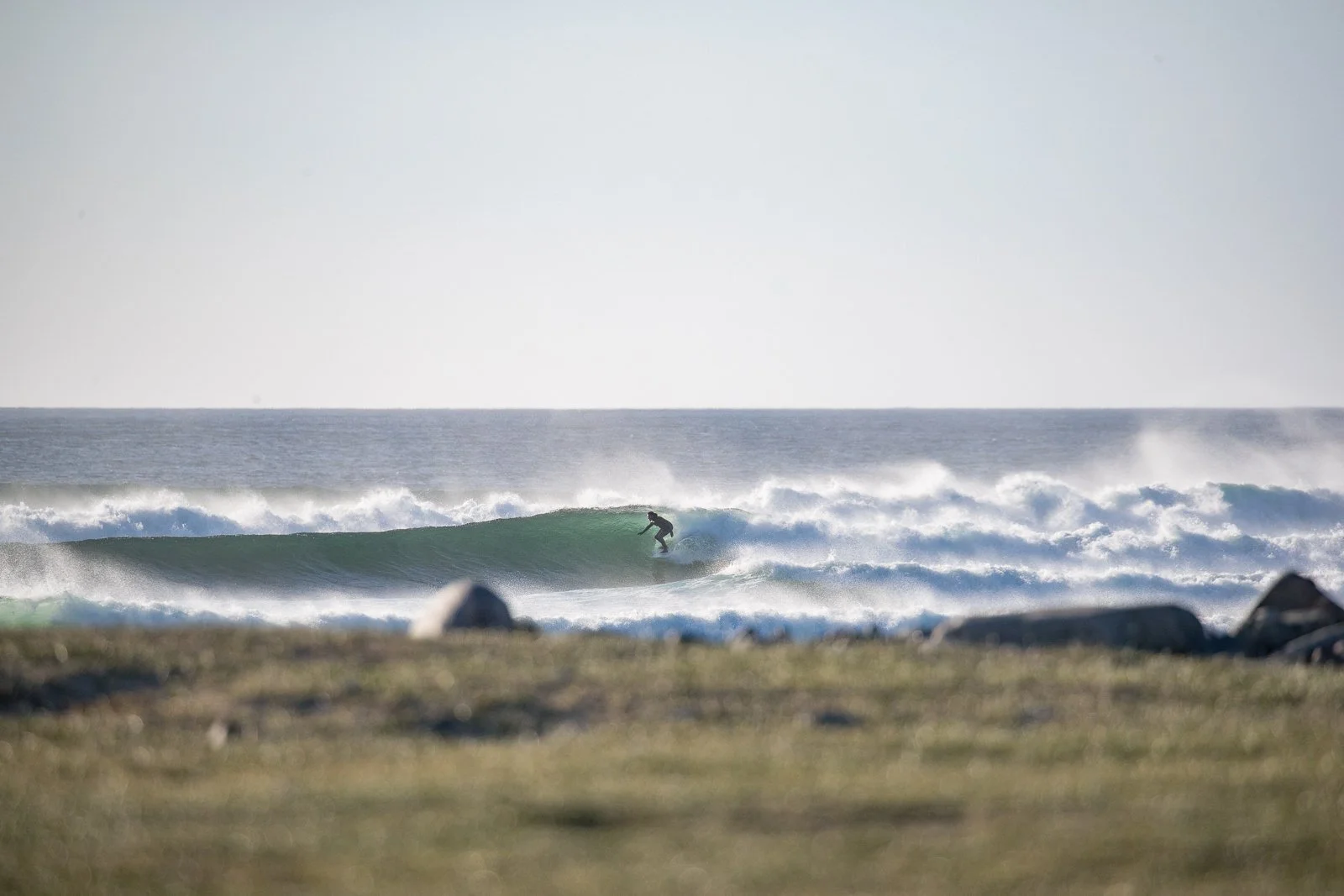
• Session photos from Scottish winter lineups
• Honest feedback
• What surprised us
• What we refined
And your chance to get your mitts on the finished HOT POTATO® system.
Real winter.
Real surfers.
Real results.
Coming soon.
Can a Heated Wetsuit Actually Work for Cold Water Surfing?
It All Begins Here
From Michelin Man to Offensive Engineering
Why We Built a Heated Wetsuit That Actually Works
Wetsuits have come a long way.
The 6/4 modern winter suit is nothing like the old Michelin Man stiffness we grew up with. Materials are lighter. Stretch is better. Thermal linings are incredible.
The needle has shifted.
But still — every extra millimetre adds weight. Every layer adds restriction. Every winter you feel it in your shoulders after two hours of paddling.
We didn’t want to keep adding neoprene.
We wanted to remove it.
Early Attempts
We tried what was already out there.
Early heated solutions from brands like Quiksilver and Thermalution promised a lot. We tested both.
What we found:
Too much hassle
Inconsistent heat
Surface heat to the skin — not real core warmth
Constant fiddling with switches in the lineup
Most sessions became an exercise in wondering:
Is this even working?
Instead of focusing on waves, you were battling battery anxiety.
That wasn’t good enough.
Going on the Offensive
Most winter gear fights attrition.
More thickness.
More layering.
More compromise.
We wanted to go the other way.
Instead of defending against cold, we decided to attack it.
Testing began in winter 2023/24.
Soldering iron on the bench.
Breadboard circuits.
Chopped-up polypropylene vests.
Belts. Girdles. Mock textile stacks.
A few steps forward. A few steps back.
Heat too aggressive.
Heat too weak.
Wrong placement.
Wrong insulation.
Iteration after iteration.
The Breakthrough
By winter 2024/25 we had a working prototype.
The final push wasn’t electronics — it was textiles.
Layering. Insulation. Reflection. Redistribution.
Not just heat to skin — but heat managed through the core.
That winter we surfed the entire Scottish season in a 4mm wetsuit.
Not chasing a “hot patch.”
Not cranking switches in the lineup.
Just controlled warmth.
Automatic.
Reliable.
Why This Matters
Modern wetsuits are excellent.
But even the best 6/4 still adds drag. Still adds weight. Still adds fatigue.
If you can drop 1–2mm while maintaining comfort, the difference is real.
More paddle freedom.
Less shoulder burn.
Longer sessions.
That was the goal.
And that’s what HOT POTATO® was built to deliver.